Two visits, or one
A break-in on Fourth Street is discovered at two in the morning by the alarm company or at seven by the person opening. The hour decides whether there is one visit or two. At two, with the glass gone from a door panel, the job is to make the shop lock tonight: a door that closes and holds, a board over the opening the glazier will fill, a rear door that latches. The permanent work waits for daylight and glass. At seven, with the street waking up, the two collapse into one visit.
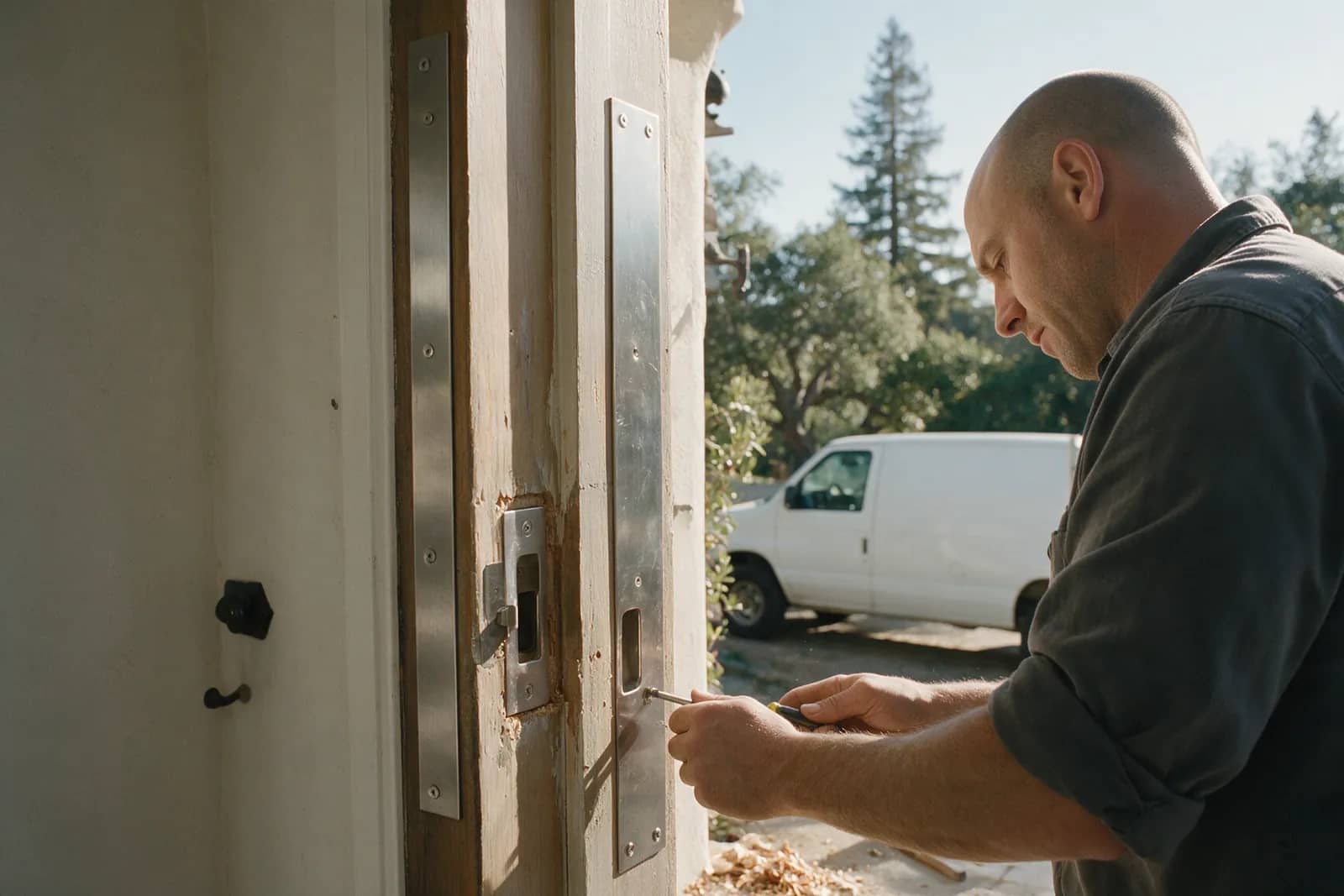
Post break-in lock repair runs $165 to $435 and covers the parts that took the force: a bent bolt, a torn keeper, a stile spread at the lock, a strike pulled out of a wood jamb. The overnight supplement of $90 is inside the figure named on the call, and if the night visit and the day visit are separate, each is named separately so the insurer sees two lines and not a muddle. Describe the door plainly on the call, or send a photo; the figure is built from that.
What a Fourth Street door is
The shop fronts along Fourth Street are older buildings, brick and stucco, with a recessed entry and a tile threshold that has been there since the building was a bank or a dry goods store. The door in the recess is aluminum with a glass panel, or a wood door with a glass light, in a frame that has taken six tenants. It carries a deadlatch and a closer, and the closer has usually been tired for a year. The rear door onto the parking lot behind the block is steel or wood, sometimes behind a roll-down grille, with a deadbolt from the 1980s and a bar if staff exit through it.
A door like that is entered in one of three ways. The glass panel is broken and the thumb turn inside reached through the hole. The stile is pried until the deadlatch slips past the keeper. Or the rear door is forced from the lot, where nobody is walking past at two in the morning. Which of the three it was decides what is repaired, and the technician says at the door whether the lock failed or the frame did.
The front lock is often not where they came in
Owners arrive at a broken front door wanting a new front lock. Often the front lock is fine. The glass was broken and the thumb turn reached, and no lock on earth stops a hand through a hole; the answer there is a double cylinder, key on both sides, where the fire code allows it, or a thumb turn set far enough from the glass that a hand cannot reach it. Or the entry was the rear door, the transom above it, or the shared wall from a vacant unit next door, and the front door was the way out.
The technician looks at all of it before naming what is done: the front stile and keeper, the rear door and its frame, the grille lock, the transom. What the event proves about the hardware is written on the receipt in plain words, because that sentence is what the landlord and the insurer will each read first.
What is done at two in the morning
In the dark, the work is to make the openings hold until the glazier comes. The keeper on the front frame is reset so the deadlatch catches again; if the cylinder was wrenched, a fresh cylinder goes in on a temporary key. A pried stile is drawn back to the keeper so the door closes and locks. The boarded panel gets a hasp and a padlock on the inside if the door cannot otherwise be secured. The rear door is made to lock, and if the bar was bent so that it no longer latches, it is set so the door holds until it is replaced.
What waits for daylight is the permanent work: a hookbolt on a pair of doors that was pried apart, a guard plate over the gap at the stile, a new closer so the door actually reaches the strike, a bar replaced at $299 to $779 per device, and the cylinder pinned to the shop's real key. Both lists are named on the call and again on the receipt, so that the night visit is not mistaken for the whole repair.
Which keys matter
If keys were taken, from a hook by the register, the office desk or the cash drawer, every door those keys open is on someone else's ring tonight, and those cylinders are repinned at $26 to $43 each, that night or first thing. If no key is missing, the untouched cylinders stay, and the technician says so rather than replacing them. That is the whole of the key question, and it is settled at the door in a minute.
The register and the safe have their own locks and their own logic. A safe that was carried off is the insurer's concern; a safe that was attacked and stays shut is opened at $189 to $525 and in most cases the door survives. A register drawer forced open is replaced by the register company, not by a locksmith.
The day after, the landlord and the insurer
The building on Fourth Street belongs to someone, and the door in the recess is usually the landlord's under the lease, with the tenant responsible for the lock. Both are told in writing what was done and why, and the written line from Marin Lock & Key says it in a form a landlord can file: the door, the damage, the repair, the figure. The insurer wants the police report number, photographs from before anything was touched, and the itemized receipt naming parts and labor. Take the photographs before the night visit begins, and keep them with the report.
Marin Lock & Key works to a promise called Named Before the Van Leaves: one full figure named on the call, covering the visit, the labor, the parts and the drive; the technician's name and a thirty-minute window by text before the van leaves the yard, and a call from the door; opened without damage first, with drilling only after you agree, at the same figure; card or tap at the door, an itemized receipt by email, and a written line for a landlord, an HOA or an insurer if one is needed. After a night like this, the written line is the part every owner uses, and arrival to Fourth Street is about fifteen minutes at any hour.
Quick answers
Can the shop be made to lock at two in the morning before the glass is replaced?+
Yes. The keeper is reset, a temporary cylinder goes in if the old one was wrenched, the boarded panel is secured from inside and the rear door is made to latch. The permanent work is done in daylight once the glazier has been, and each visit is named separately on the call.
The glass was broken and the thumb turn reached. Do I need a new lock?+
Usually not a new lock but a different one. A double cylinder where the fire code allows it, or a thumb turn set out of reach of the glass, stops the same entry. The lock itself is often undamaged and the technician says so at the door.
What does the insurer want from the locksmith after a break-in?+
An itemized receipt naming the parts and the labor, sent by email before the van leaves, and on request a written line stating the door, the damage and the repair. Keep your own photographs from before the work and the police report number with it.
Need it handled rather than read about?
(628) 251-8459More guides